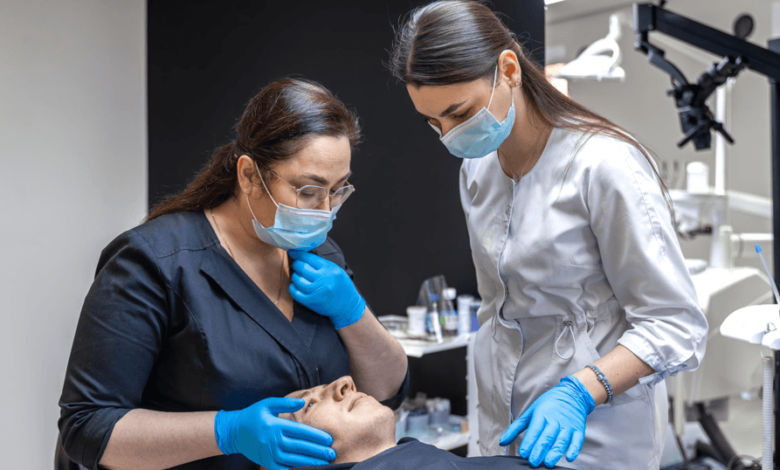
If you are facing symptoms, such as persistent adult acne, an unnatural number of moles, chronic rashes, sudden hair thinning, changes in the nail texture, unusual growths, or skin tags, and age spots due to sun damage, you should definitely visit a dermatologist.
Key Takeaways
- Moles that rapidly change appearance over time in size, shape, and color often indicate melanoma, a type of skin cancer.
- A harsh Canadian winter can trigger chronic rashes, like eczema, contact dermatitis, or psoriasis.
- If you are experiencing persistent adult acne, dark pigmentation due to sun damage, nail problems, skin warts, tags, and sudden patchy hair loss, consulting a dermatologist is a smart choice.
When To Visit A Dermatologist Around Me (dermatologue autour de moi)?
In Canada, people suffer from different types of skin conditions. You need to visit a dermatologist if you are having these symptoms, such as chronic winter rashes, persistent adult acne, sudden hair loss, and changes in nail texture, etc.
1. Evolution of Moles: Understanding the ABCDEs of Skin Cancer
Many people have moles that remain static over the years. But some moles change appearance with time, known as evolving moles. To identify Melanoma, a type of skin cancer, many dermatologists observe moles as a primary warning sign. In short, the method is called ABCDEs of melanoma. A for asymmetry, when half of the mole doesn’t match with the other half, B for border, when the edges or border lines of the moles are blurred, uneven, and irregular, C for color, if the color of the moles has multiple shades, D for diameter or dark, if the mole is larger and darker compared to regular moles, and E for evolving, when the mole changes over time in shape, color, and size. These are key indicators of Melanoma.
If your moles have any of these features, it is essential to have them checked by a dermatologist immediately.
2. Persistent Adult Acne That Defies Over-the-Counter Solutions
If you have persistent adult acne, they might not get treated by over-the-counter product solutions. They are basically painful cysts on your skin, which need immediate dermatologist consultation to get treated.
How To Understand Whether It Is Persistent Adult Acne Or Not
- The acne does not go away even after 6 to 8 weeks of using OTC solutions, such as creams and gels containing benzoyl peroxide or salicylic acid.
- If the affected area is painful and they are cystic acne.
- If the acne leaves dark spots or pigmentation.
- If the acne is causing you heavy mental stress and hampering your daily life.
3. Chronic Rashes and the “Canadian Winter” Skin Barrier Collapse
In Canada, chronic rashes occur when the skin barrier collapses. Harsh and cold wind, low humidity strips the oil and moisture from the skin, causing the collapse of the skin barrier.
Eczema, psoriasis, and contact dermatitis are types of chronic rashes that happen in winter.
In the landscape of Canada, if you experience constant itchiness, redness, and inflammation, it is safe to visit a dermatologist in Laval or Montreal to treat the condition.
If not treated timely, chronic rashes, like eczema and psoriasis, spread very quickly, and if the rashes occur near your eyes or nose, they can ultimately lead to blindness.
4. Sudden or Patchy Hair Loss (Alopecia)
If you are noticing sudden hair loss in patches, it could be a sign of alopecia. This is an autoimmune condition.
A dermatologist may suggest topical or injected corticosteroids to reduce inflammation and promote regrowth. Many people experience spontaneous hair regrowth within a year, but the condition can recur.
5. Unexplained Redness and Rosacea Flare-ups
Unexplained, persistent facial redness or frequent rosacea flare-ups need a visit to a dermatologist, as these are indicators of a chronic inflammatory condition.
These can get worse over time if left untreated for a long time.
A dermatologist consultation is required if it persists for more than two weeks, broken blood vessels become visible, and the infection starts to spread near your eyes.
Alcohol, spicy food, and extreme temperatures can trigger this condition. Hence, seeking professional care is important.
6. Nail Changes: Streaks, Brittle Texture, and Fungal Infections
If your nail starts to change suddenly, such as dark streaks, increased brittleness, or fungal infections, these changes can be signs of underlying issues like nutritional deficiencies, skin diseases like psoriasis, or nail melanoma in rare cases.
In these situations, visiting a dermatologist is a good choice.
7. Unusual Growths, Warts, and Skin Tags
Unusual skin growth, warts, or tags should be evaluated by a dermatologist to rule out the possibilities of skin cancer or infections. If the growth rapidly changes in shape, size, and color, the skin tags are painful, itchy, and swollen, and spread quickly across an area of your body, you need to consult a dermatologist.
8. Stubborn Pigmentation or “Age Spots” from Sun Damage
Due to prolonged sun exposure, excessive melanin production can cause stubborn pigmentation, or age spots, on the skin.
They often indicate an underlying skin disease. To be on the safe side, it is better to consult a dermatologist in Laval or Montreal.
See also: How Nail Salons Can Help You Maintain Healthy and Beautiful Nails
In Conclusion…
Canada has a harsh winter climate that can trigger various kinds of skin diseases by making your skin dry and moistureless. Many people who are suffering from skin conditions often search for a dermatologist around me (dermatologue autour de moi) to treat these issues. You can make your skin better by following the comprehensive skin care and treatment prescribed by your dermatologist.
Are You Planning To Visit A Dermatologist?
If you are experiencing skin problems and want to consult a dermatologist, book an appointment at a professional and trusted clinic to get the best quality treatment.